
How Are Professional Scale Models Manufactured?
From CAD to Finished Model
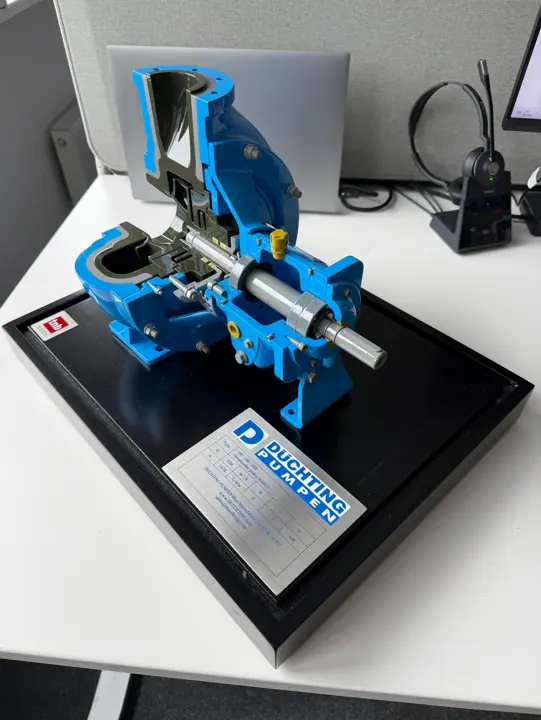
Professional scale models are manufactured through a combination of digital engineering, precision fabrication, skilled manual assembly and detailed finishing.
Although the finished model may look like a single object, a complex architectural, marine, industrial or engineering model can contain hundreds or thousands of individually manufactured components.
The process begins long before the first physical component is produced.
1. Project Information and Technical Review
The first stage is understanding the project.
Depending on the type of model, the manufacturer may receive:
- CAD drawings;
- 3D models;
- BIM information;
- engineering drawings;
- architectural drawings;
- renders;
- photographs;
- color references;
- technical specifications.
The manufacturing team reviews the information to understand the required scale, physical dimensions, complexity, level of detail and intended use.
The manufacturer also needs to understand the final deadline and delivery requirements.
2. Selecting the Scale
The appropriate scale is determined according to the project.
Factors include:
- original project dimensions;
- available display space;
- required level of detail;
- viewing distance;
- transport requirements;
- presentation objectives.
For large developments, a smaller scale may allow an extensive area to be represented within a manageable physical footprint.
For small engineering components, a larger scale may be required to reveal internal or mechanical details.
3. CAD and CAM Preparation
Digital design information is converted into manufacturing information.
The original CAD or 3D data may require preparation, segmentation, modification or reconstruction before individual components can be manufactured.
This is where the digital model becomes a production model.
The manufacturing team determines:
- which components should be machined;
- which should be laser cut;
- which should be 3D printed;
- which materials should be used;
- how components should be assembled;
- how lighting and electrical systems should be integrated.
4. Material Selection
Professional scale models may combine several materials.
Depending on the application, these can include:
- acrylic;
- PVC;
- ABS;
- aluminum;
- steel;
- copper;
- plywood;
- 3D-printed materials.
Material selection depends on the required appearance, geometry, strength, manufacturing process and finishing requirements.
Using one material for every component is rarely the best solution.
5. Component Manufacturing
A complex scale model is normally manufactured as a collection of individual components.
Different technologies are selected according to geometry and material.
CNC Machining
CNC machining can be used for components requiring accurate dimensions, repeatability and controlled geometry.
Laser Cutting
Laser cutting is suitable for accurately producing sheets, panels and other components with detailed profiles.
3D Printing
3D printing can be used for complex geometries and components that would be difficult or inefficient to manufacture using conventional methods.
Manual Fabrication
Not every component should be digitally manufactured.
Skilled model makers remain essential for fabrication, assembly, finishing and details that require manual craftsmanship.
6. Painting and Surface Finishing
Once components have been manufactured, they can be painted and finished according to the project's references.
This stage is particularly important for architectural and marine models where color, surface appearance and material differentiation contribute significantly to realism.
Finishing can also help distinguish different materials and functional areas within an industrial or engineering model.
7. Manual Assembly
The manufactured components are then assembled into the completed model.
Depending on the project, this may involve:
- buildings;
- façades;
- decks;
- machinery;
- pipework;
- landscaping;
- vehicles;
- vessels;
- technical equipment;
- infrastructure.
Complex projects can require extensive manual assembly because the individual parts need to be positioned precisely and consistently.
8. Lighting and Electrical Integration
Professional scale models can incorporate electrical systems and LED lighting.
Lighting can be used to highlight:
- buildings;
- streets;
- interiors;
- public spaces;
- industrial equipment;
- navigation systems;
- selected areas of a masterplan.
Electrical systems should be incorporated during the manufacturing process so that wiring, control systems and access requirements are properly considered.
9. Interactive and Digital Features
A physical model can also become an interactive communication system.
Depending on the application, TNBuilt West can integrate technologies such as:
- LED lighting;
- digital displays;
- touchscreens;
- projection mapping;
- interactive controls;
- virtual or digital reality elements.
This approach is particularly useful for exhibitions, visitor centers, museums, sales environments and large development presentations.
10. Quality Control
Quality control should take place throughout the project, not only at the end.
Depending on the project, progress photographs and videos can be used to allow the client to monitor manufacturing remotely.
At the final stage, the completed model is inspected for:
- dimensional accuracy;
- component positioning;
- surface finish;
- color;
- lighting;
- electrical functions;
- assembly quality;
- overall presentation.
Any required corrections can be addressed before final approval.
11. Packaging and International Delivery
A finished professional scale model must be transported without compromising the work completed during manufacturing.
Packaging therefore forms part of the project.
Large or complex models may require specialized protective packaging and modular construction to make transportation and installation practical.
International delivery also requires appropriate logistics and customs documentation.
12. Installation
Most models are delivered as a completed unit.
Large models may need to be assembled at their final destination.
Installation can include:
- positioning the model;
- assembling modular sections;
- connecting electrical systems;
- installing protective enclosures;
- testing lighting and interactive features;
- final presentation adjustments.
Manufacturing More Than a Miniature
A professional scale model is not simply a smaller version of the original object.
It is a manufactured product in its own right.
The manufacturer has to interpret source information, select materials, plan production, manufacture individual components, assemble them accurately, integrate technical systems and deliver the finished model safely.
For this reason, the best professional scale model manufacturers combine engineering capability, digital manufacturing technology and skilled craftsmanship.
TNBuilt West Manufacturing Capability
TNBuilt West combines digital manufacturing with professional model-making expertise to produce bespoke models for:
- architecture;
- real estate;
- marine;
- offshore oil & gas;
- energy;
- master planning;
- industrial facilities;
- engineering;
- machinery and technical components.
The manufacturing process can incorporate CAD/CAM preparation, CNC machining, laser cutting, 3D printing, painting, manual assembly, LED and electrical integration, quality control and professional packaging.
The exact process is adapted to each project's requirements.
If you have CAD files, drawings, renders or technical information for a project, TNBuilt West can review the information and develop a manufacturing approach tailored to the required scale, level of detail and final application.
Go to Next Guide:“The Complete Guide to Professional Scale Models”